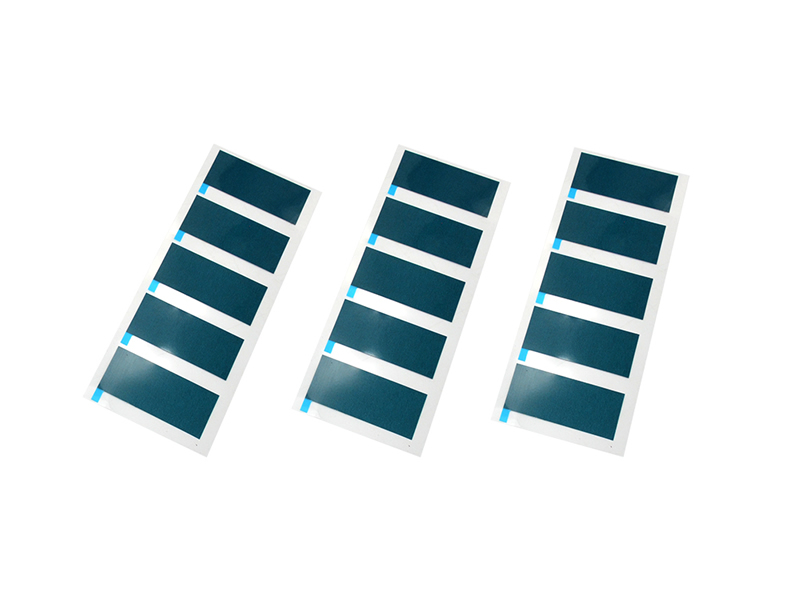
Conductive adhesive is a type of adhesive with conductive properties after curing or drying, widely used in fields such as electronic manufacturing, semiconductor packaging, new energy, and aerospace. It can achieve mechanical connections and electrical path construction between materials and is an important technical solution to replace traditional welding.
1、 Core Composition and Conductive Mechanism
Conductive adhesive is mainly composed of matrix resin (such as epoxy resin, polyimide) and conductive filler (such as silver powder, copper powder, carbon black). The conductive mechanism is based on the "percolation theory": when the content of conductive filler exceeds the critical volume fraction (usually 60% -80%), particles come into contact with each other to form a continuous conductive path, thereby achieving conductivity.
Conductive filler type:
Silver based conductive adhesive: It has the best conductivity and is widely used, but the cost is relatively high.
Copper based conductive adhesive: Low cost, but prone to oxidation, affecting long-term stability.
Silver plated copper powder/core-shell structured filler: balancing conductivity and cost, is currently a research hotspot.
Type of matrix resin:
Epoxy resin: high bonding strength, mature process;
Organic silicon: good flexibility, suitable for dynamic stress environments;
Polyimide: Excellent high temperature resistance, up to 350 ℃ or above.




 Language
 Your location:

 Follow us
 0769-85300450
  E-mail